AI Governance Capability

AI Discovery and Registry
AI governance breaks down when teams cannot answer a simple question: what AI is actually in use across the business? Formal intake catches some systems, but it misses embedded AI in SaaS, internal agents, model changes, and shadow AI adopted outside standard review. OneTrust AI Governance discovery and registry capabilities create a current system of record for AI use cases, models, agents, and SaaS with embedded AI. Teams can track ownership, metadata, version history, and deployment status in one place so governance decisions start from a known inventory.
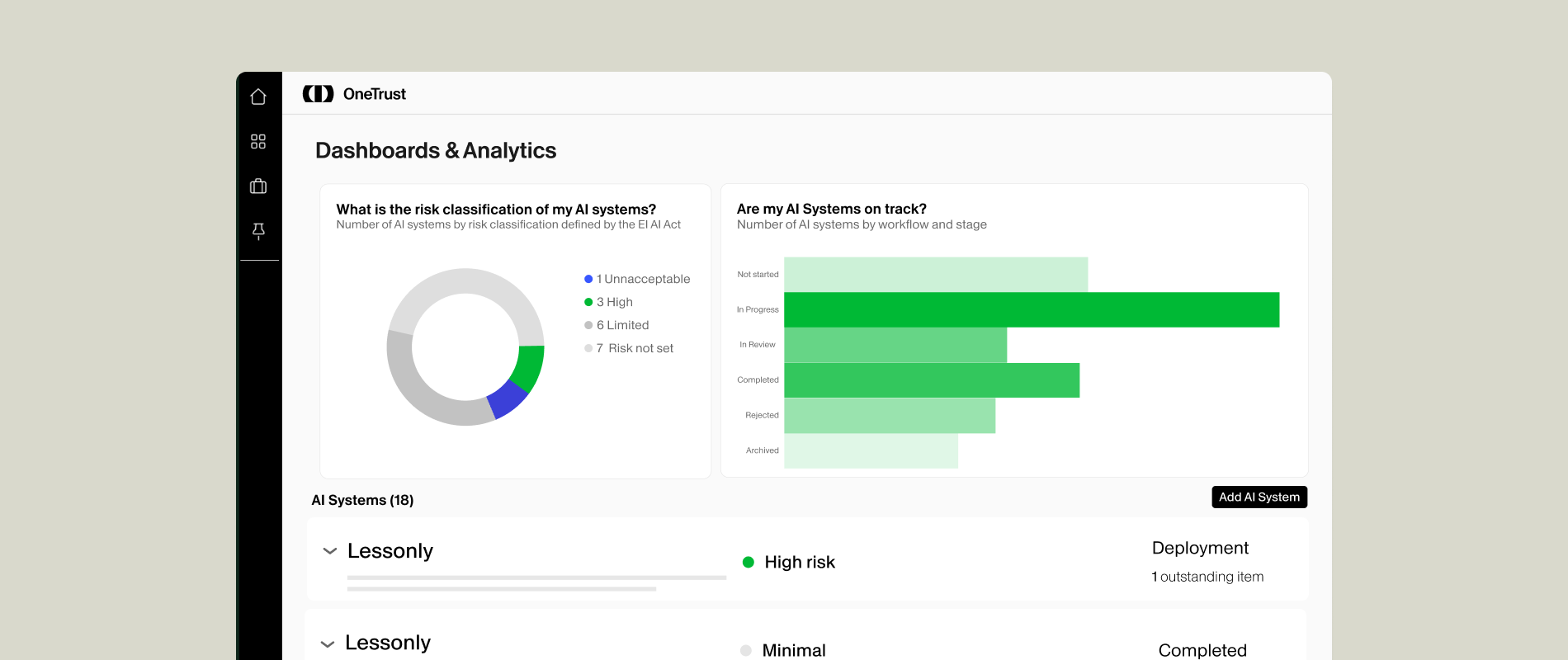
Build a Current AI Inventory That Supports Governance Decisions
OneTrust makes the AI registry the system-of-record layer for AI governance. It brings together AI discovery, standardized metadata, ownership and lifecycle tracking, shadow AI identification, and record-level change history so teams can see what AI exists and what state it is in. Explore the capabilities that can keep your AI inventory current and useful across intake, oversight, and downstream enforcement.
Discover Declared and Undeclared AI Systems
Most organizations already have AI in use before the governance team sees an intake form. Business teams buy SaaS products with embedded copilots. Developers test external model APIs. Product teams release internal agents. Each system may look manageable on its own, but the full inventory is fragmented.
A workable discovery process follows four steps:
A workable discovery process follows four steps:
- Identify declared AI through intake, procurement, architecture review, and model onboarding
- Surface undeclared AI through vendor reviews, owner attestations, integrations, and periodic inventory checks.
- Classify each item by intended purpose, model type, business process, and deployment status.
- Route gaps into governance workflows when a newly found system needs formal review.
Capture the Metadata an AI Inventory Needs
An effective AI inventory goes beyond basic details. Teams need a clear, consistent view of each system: what it does, who owns it, how it’s built, what data it uses, and where oversight is required.
This level of detail also supports regulatory and framework expectations, which rely on strong documentation, clear accountability, and defined system purpose.
OneTrust brings all of this information into a single, structured record. That makes it easier to compare systems, spot gaps, and produce consistent documentation, without rebuilding the same information for every review.
Track Ownership, Lifecycle, and Change History
AI inventories go stale when no one owns the record. A registry should show who is accountable, where the system sits in its lifecycle, and what changed since the last review. A record should make it clear whether a system is proposed, in development, in testing, approved for production, restricted, under reassessment, or retired.
Change history matters because AI risk often changes without a product rename. A prompt update, model swap, retrieval source change, or new agent action can change the risk profile. The record should show what changed, when it changed, who approved it, and whether reassessment is required.
Gartner includes AI Discovery and Registry as a key capability in AI governance platform evaluation. That matters because inventory is not a side feature. It is the operating layer that supports review, monitoring, and accountability.
Identify Shadow AI and Embedded AI in SaaS
Shadow AI goes beyond public chatbot use. It includes business tools with AI features turned on without review, internal copilots built in low-code tools, and vendors that add AI after procurement. These systems often slip through governance because they enter through normal software channels.
A strong registry treats shadow AI as an ongoing discovery effort. Teams should regularly check vendor updates, confirm usage with system owners, compare procurement and architecture records, and flag unknown services for review. When gaps are found, those systems should be added to the registry and brought into formal governance.
Unlike general IT compliance tools that focus on evidence and control status, AI governance requires deeper visibility — like system purpose, data use, oversight, and lifecycle changes.
Connect Inventory Records to Governance and Production Oversight
The registry is the system of record, not the full governance program. Governance workflows handle intake, approvals, and review steps. Runtime controls handle enforcement in production. The registry holds the record those processes depend on.
That structure supports regulatory work as well. Teams working on EU AI Act compliance can use the same record to support classification, documentation, ownership, and evidence collection. Instead of asking multiple teams to recreate the same AI facts, the registry becomes the shared source.
A current AI registry gives teams the record they need before policy, risk assessment, monitoring, and enforcement can work well.
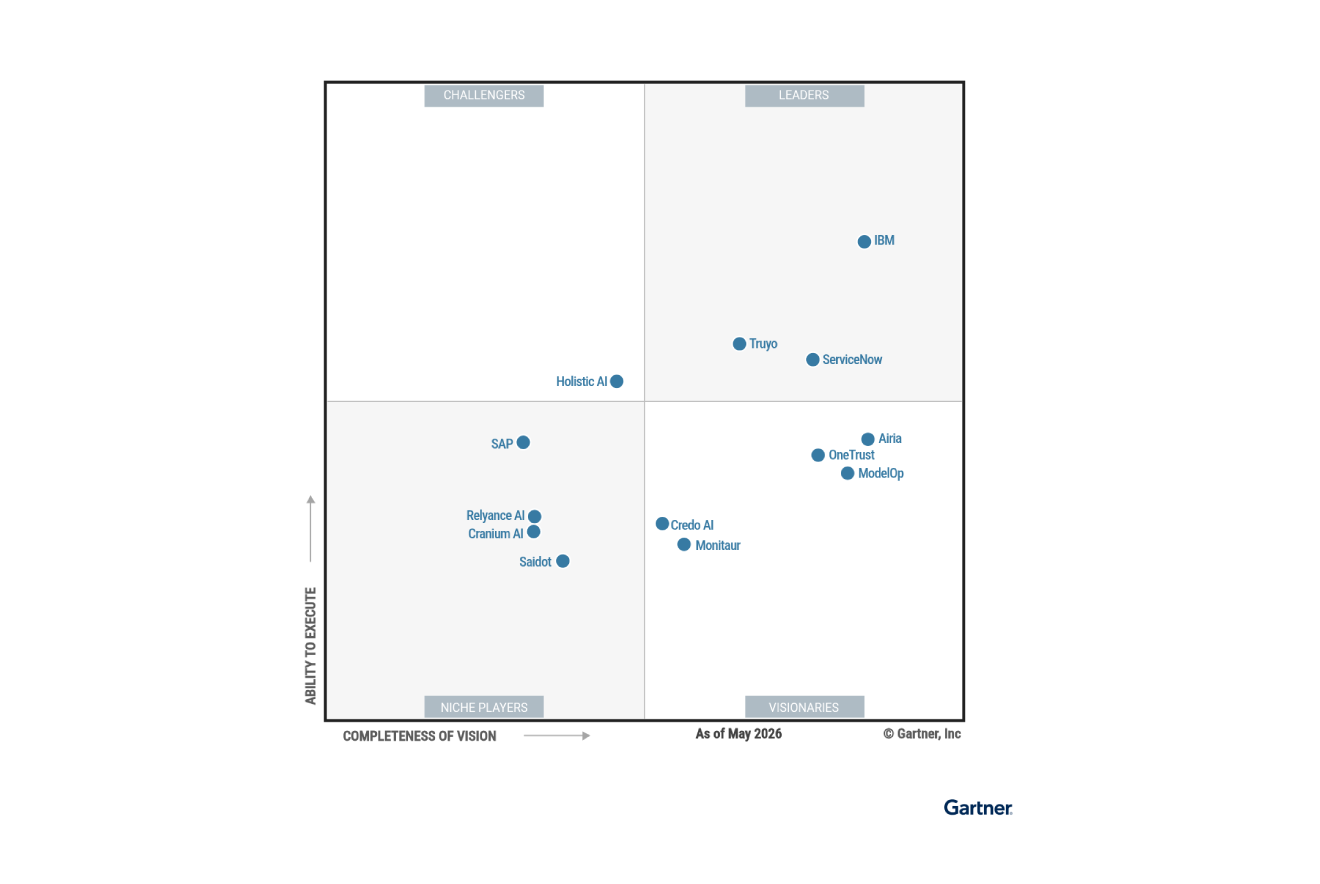
OneTrust Named a Visionary in the 2026 Gartner® Magic Quadrant™ for AI Governance Platforms
See why Gartner recognized OneTrust as a Visionary in the inaugural Magic Quadrant for AI Governance Platforms.
Frequently Asked Questions
An AI use case registry is the system of record for AI systems, models, agents, and embedded AI features. It stores key facts such as intended purpose, ownership, lifecycle stage, data sources, and deployment status. A strong registry also tracks version history and links each record to approvals, assessments, and monitoring. That makes it more useful than a static spreadsheet.
Organizations identify shadow AI by comparing multiple sources instead of waiting for self-reporting. Common steps include reviewing procurement records, vendor questionnaires, architecture sources, API usage, and owner attestations. Any undeclared AI system should be added to the registry, classified, and routed into review. This is how teams catch embedded AI and business-owned agents that never entered formal intake.
OneTrust supports the documentation work tied to the EU AI Act by structuring inventory records around purpose, ownership, data sources, controls, and lifecycle evidence. That gives teams a current record for risk management, technical documentation, recordkeeping, and transparency activities. It also reduces the gap between what is deployed and what is documented.
OneTrust helps teams capture the key details needed to govern AI — like purpose, context, ownership, and accountability — in a consistent way. The platform also keeps that information documented and organized for audits and compliance.
In practice, teams can create one standard inventory record and reuse it across frameworks, assessments, and audits.
AI discovery and registry capabilities answer what AI exists, who owns it, and what state it is in. Governance workflows answer how an item moves through intake, review, approval, and reassessment. The workflow is the process layer. The registry is the record layer. Organizations need both, but they serve different purposes.
You May Also Like




Create a current system of record for AI systems, agents, and embedded AI across the business.