AI Governance Capability

Dynamic Risk Scoring
AI risk does not stay fixed after approval. OneTrust Dynamic Risk Scoring continuously measures AI behavior, context, and control signals so teams can see when risk is rising and why. Teams can monitor production performance, explain system behavior, generate reporting, and connect scored risk to downstream governance and enforcement.
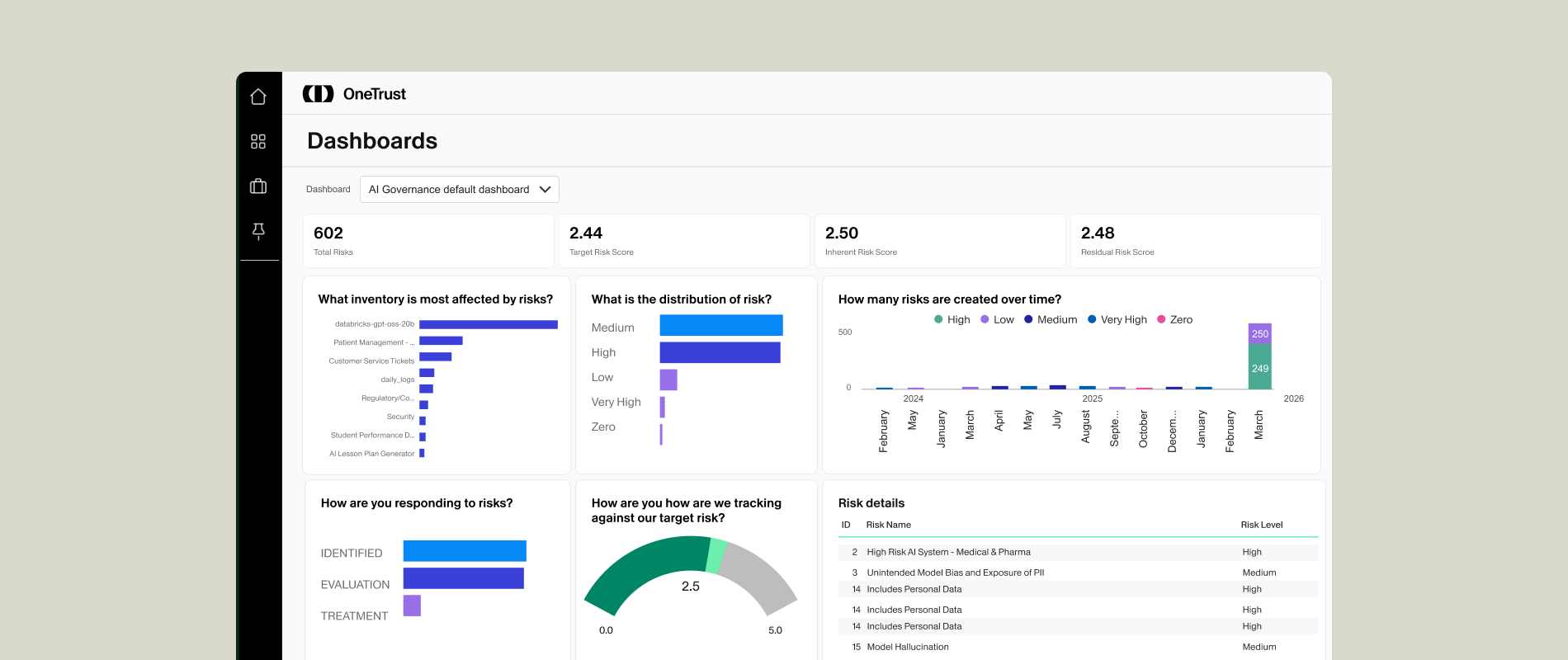
Continuously Monitor AI Systems, Score Changing Risk, and Generate Reporting
OneTrust connects AI telemetry, policy context, and business context to continuously score risk in production. Teams can monitor models and agents, diagnose drift and unsafe behavior, explain why risk changed, generate dashboards and model documentation, and route scored issues into review or enforcement. Explore the monitoring and reporting capabilities that quantify risk before runtime controls take action.
Observe Models, Applications, and Agents in Production
Production monitoring should show more than uptime and latency. Teams need visibility into output quality, safety signals, drift indicators, prompt and response patterns, agent actions, data sensitivity context, and changes in connected tools or retrieval sources.
That matters because AI systems often fail while staying technically available. A chatbot can continue answering while producing unsupported recommendations. An agent can remain online while taking the wrong action path. A model can stay responsive while quality declines in a regulated workflow.
OneTrust ingests and organizes these signals so teams can monitor AI posture across systems and over time.
Score Risk Using Technical and Business Context
A single metric does not explain AI risk. Risk changes based on intended purpose, user type, data sensitivity, output action, regulatory scope, and the severity of the observed behavior.
A practical scoring process follows four steps:
- Capture the event or trend, such as drift, unsafe output, policy violation, or retrieval failure.
- Add business context, such as system purpose, owner, region, and affected workflow.
- Apply policy and framework logic based on thresholds and obligations.
- Assign a score that supports triage, escalation, and historical comparison.
This is where AI monitoring differs from general continuous compliance tooling. IT compliance tools can show whether a check passed. They are not designed to show why a model’s behavior changed, whether prompt misuse is rising, or whether drift matters more because the system supports a regulated decision.
Explain Behavior and Diagnose Change
Monitoring only helps if stakeholders can understand what changed and why it matters.
- Data scientists may need prompt-level or model-level diagnostics.
- Risk teams may need a clear explanation of how production behavior differs from the approved use case.
- Auditors may need a record of what was detected, how it was assessed, and what action followed.
NIST AI RMF and ISO 42001 require more than a dashboard, they require interpretable signals, trend history, and documented response paths. OneTrust gives teams that context so monitoring supports technical review, governance decisions, and audit conversations in the same operating model.
Generate Usage Reporting, Model Cards, and Audit-ready Outputs
Monitoring data shouldn’t stay locked in engineering tools. Governance teams need clear reporting that turns production signals into usable outputs — like model cards, system summaries, issue histories, and dashboards for nontechnical audiences.
That reporting should be consistent enough to compare systems, but flexible enough for different stakeholders. Legal, engineering, audit, and executives each need a different view. OneTrust translates technical monitoring data into business-friendly reporting while keeping the underlying details intact.
This is where AI monitoring stands apart from general IT compliance. It needs to connect performance back to purpose, risk, explainability, and regulatory expectations.
Pair Risk Detection With Runtime Action
Dynamic risk scoring and runtime controls work together, but they serve different roles. Dynamic risk scoring detects, measures, explains, and prioritizes risk. Runtime controls block, redact, route, or restrict behavior when action is needed.
The handoff should be clear. When a score crosses a threshold, teams should be able to see which signal changed, which policy or threshold applied, and what action is recommended or automatic.
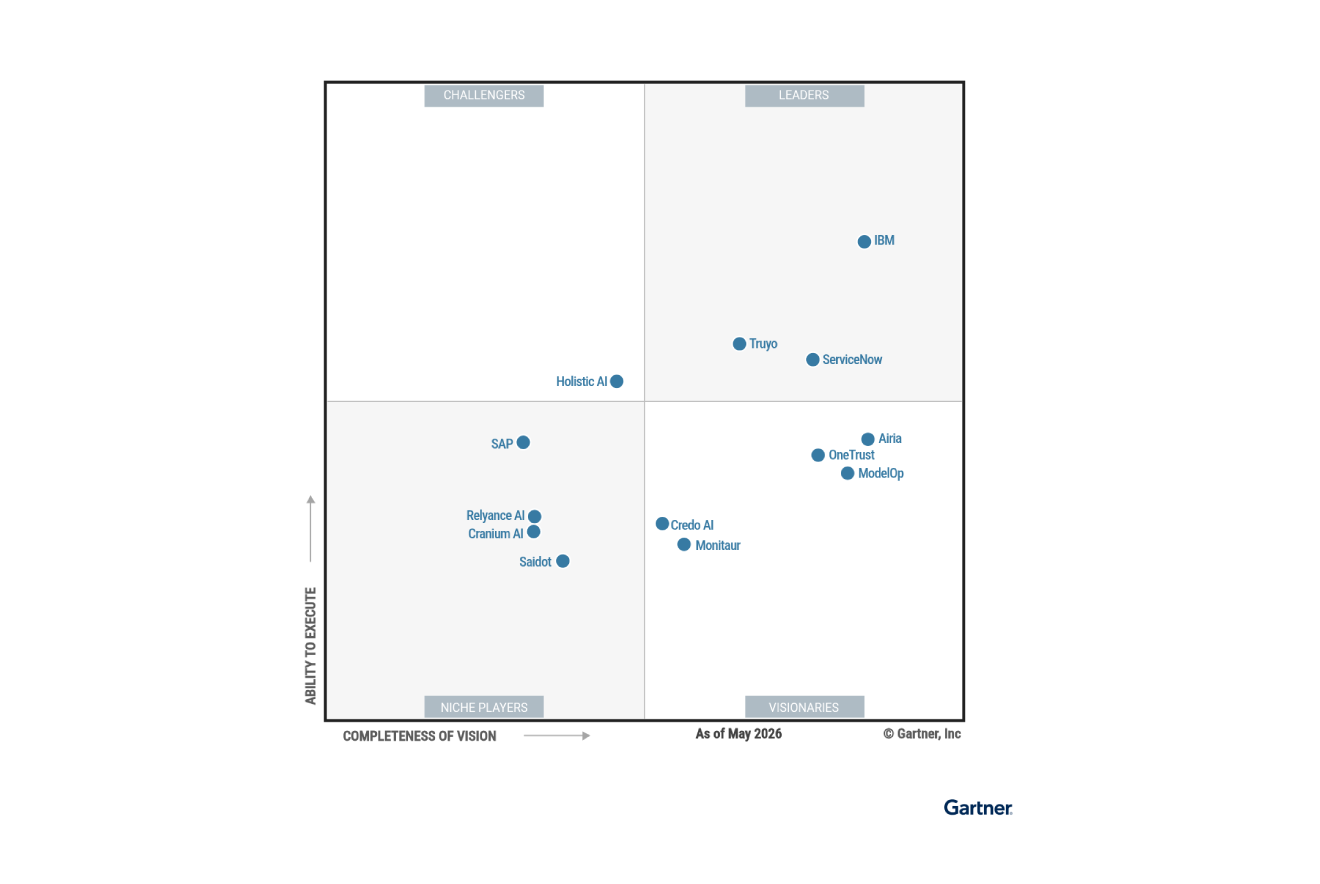
OneTrust Named a Visionary in the 2026 Gartner® Magic Quadrant™ for AI Governance Platforms
See why Gartner recognized OneTrust as a Visionary in the inaugural Magic Quadrant for AI Governance Platforms.
Frequently Asked Questions
Dynamic AI risk scoring is the continuous measurement of changing AI risk based on production signals and governance context. It combines technical indicators such as drift, unsafe output, or policy violations with business context such as system purpose, user type, data sensitivity, and regulatory scope. The goal is not just to detect an event, but to show how serious it is and what action it should trigger. That makes it more useful than a static risk label.
Organizations monitor AI systems in production by collecting quality, safety, drift, usage, and policy signals from live operation. Those signals should then be enriched with business context, compared against thresholds, and tied to alerts, dashboards, and response paths. This helps teams identify which issues are minor and which ones need fast action. Monitoring has to reflect intended purpose, not just technical availability.
OneTrust supports monitoring work tied to EU AI Act Article 15 by helping teams observe live behavior, document system quality and risk signals, and connect those signals to governance and control actions. Teams can maintain a record of what changed, how it was assessed, and what follow-up occurred. That supports oversight for AI systems that need continued review after deployment.
OneTrust AI Governance helps organizations move from one-time reviews to continuous AI oversight. The platform captures signals from production, tracks trends, and supports response workflows. It also keeps records of monitoring and performance over time.
Dynamic risk scoring is the monitoring and diagnosis layer. It detects changing behavior, explains what drove the risk score, and prioritizes what needs review or action. Runtime controls are the enforcement layer that blocks, routes, redacts, or restricts behavior based on those signals and policy logic. One measures and interprets risk. The other acts on it.
You May Also Like




Continuously score, explain, and report AI risk as models, agents, and use cases change in production.