AI Governance Capability

AI Governance Workflows Built for Audit Readiness
AI policies do not create audit readiness on their own. As AI adoption scales, manual intake forms, disconnected approvals, and outdated control tracking become the compliance risk. OneTrust AI Governance workflows give organizations the operational layer that connects every AI use case to intake, assessment, approval, control ownership, and evidence. This means governance runs as a continuous system, not a manual exercise.
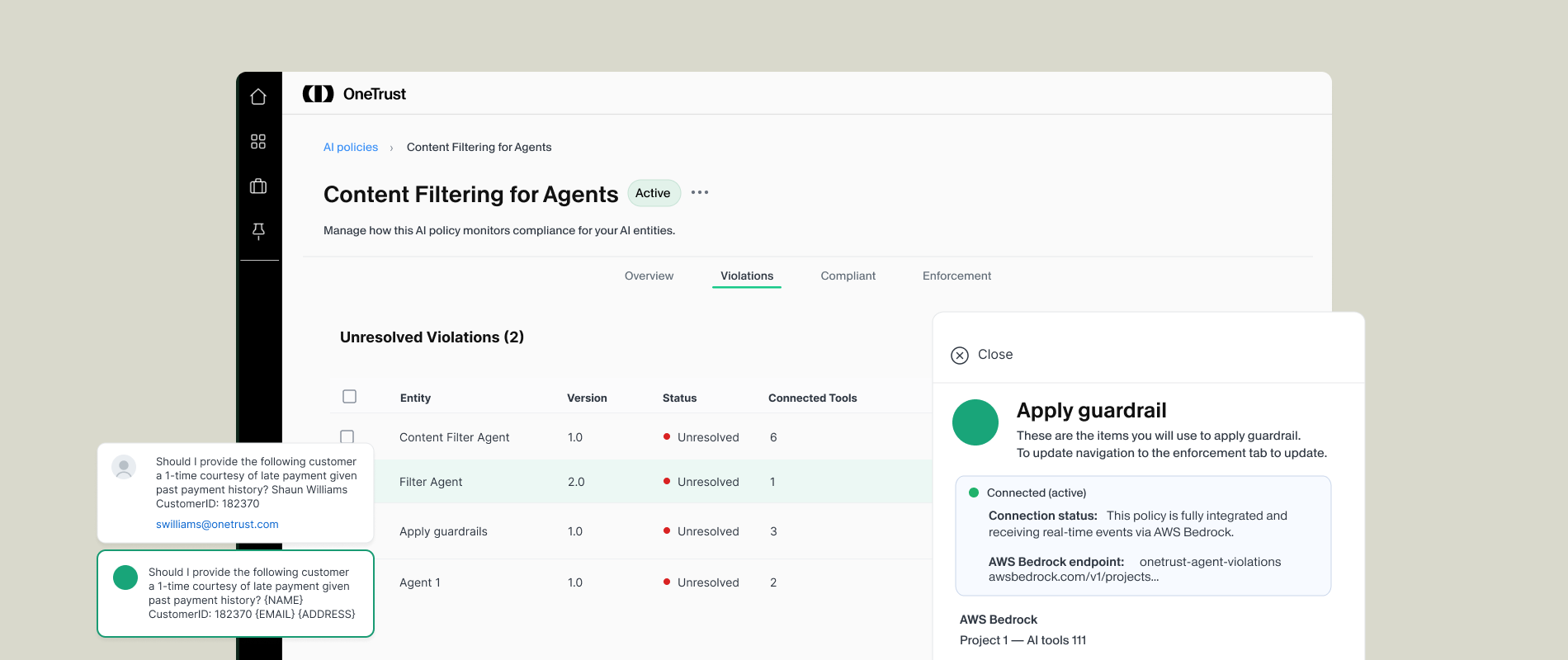
From Intake to Audit Trail: Five Workflows Behind AI Governance Execution
Compliance automation tools built for IT security frameworks handle control testing against SOC 2 or ISO 27001. AI governance workflows are different. They cover the cross-functional process of bringing a new AI system through risk assessment, multi-stakeholder approval, and ongoing oversight — a lifecycle that involves legal, privacy, security, and business leadership. OneTrust structures that process across five connected workflows, from first intake submission to audit-ready evidence package.
AI Intake and Use Case Registry
OneTrust captures each AI system, model, or use case through a structured intake workflow — recording owner, intended use, data inputs, output type, human oversight model, third-party dependencies, and regulatory exposure as named fields at submission, not as free-text attachments. Intake feeds the AI use case registry automatically, so ownership, classification, and lifecycle status are set at the point of entry rather than backfilled later.
The intake record does two things simultaneously: it creates the system-of-record entry, and it triggers the appropriate downstream workflow. A use case flagged as customer-facing at intake routes directly to a higher-tier assessment path. A use case involving a third-party model triggers vendor dependency tracking. A use case touching personal data initiates a DPIA workflow without manual routing. Every new AI project enters governance through the same consistent process, with no separate tracking spreadsheet and no reliance on individual teams to self-report.
Risk Assessment and Approval Workflows
OneTrust triggers the right risk assessment and approval workflow based on how an AI use case is classified at intake. AI impact assessments, DPIA workflows for AI, security reviews, and custom questionnaires launch automatically. Approvals route by risk tier: low-risk systems move through streamlined review paths; higher-risk systems escalate to multi-level approval chains across legal, privacy, security, compliance, and business leadership. Every approval decision is logged with rationale, timestamp, and accountable owner.
Control Assignment, Testing, and Reuse Across Frameworks
When a use case completes review and approval, OneTrust automatically assigns the required controls from a centralized library and maps them to all applicable frameworks. A single control (such as human oversight) can meet requirements across multiple standards without creating duplicate records.
Controls are assigned to specific owners as part of the workflow. Each control includes a testing schedule, linked evidence, and a current status. Test results are recorded once and automatically feed into any audit or compliance report that references that control.
This approach ensures clear ownership, consistent processes, and continuous linkage between controls, evidence, and accountability, so organizations always have an up-to-date view of compliance rather than rebuilding it at audit time.
Exception and Escalation Management
When a control fails, a review is missed, or an AI system falls outside approved parameters, OneTrust routes the exception automatically to the right owner with due dates, accountability, and status tracking. The exception lifecycle runs from detection through assignment, remediation, escalation, and closure in a defined workflow. Exception patterns are tracked over time, so teams can identify recurring control failures and systemic gaps before they become audit findings.
Audit Trail and Evidence Collection
OneTrust logs every workflow action across the governance process with timestamp and actor: intake submissions, assessment responses, approval decisions, control test results, exception closures. The audit trail is a continuous record, not a point-in-time snapshot. When an auditor or regulator requests documentation, the package is generated from the workflow history already captured and is sorted by framework, time period, or regulatory requirement.
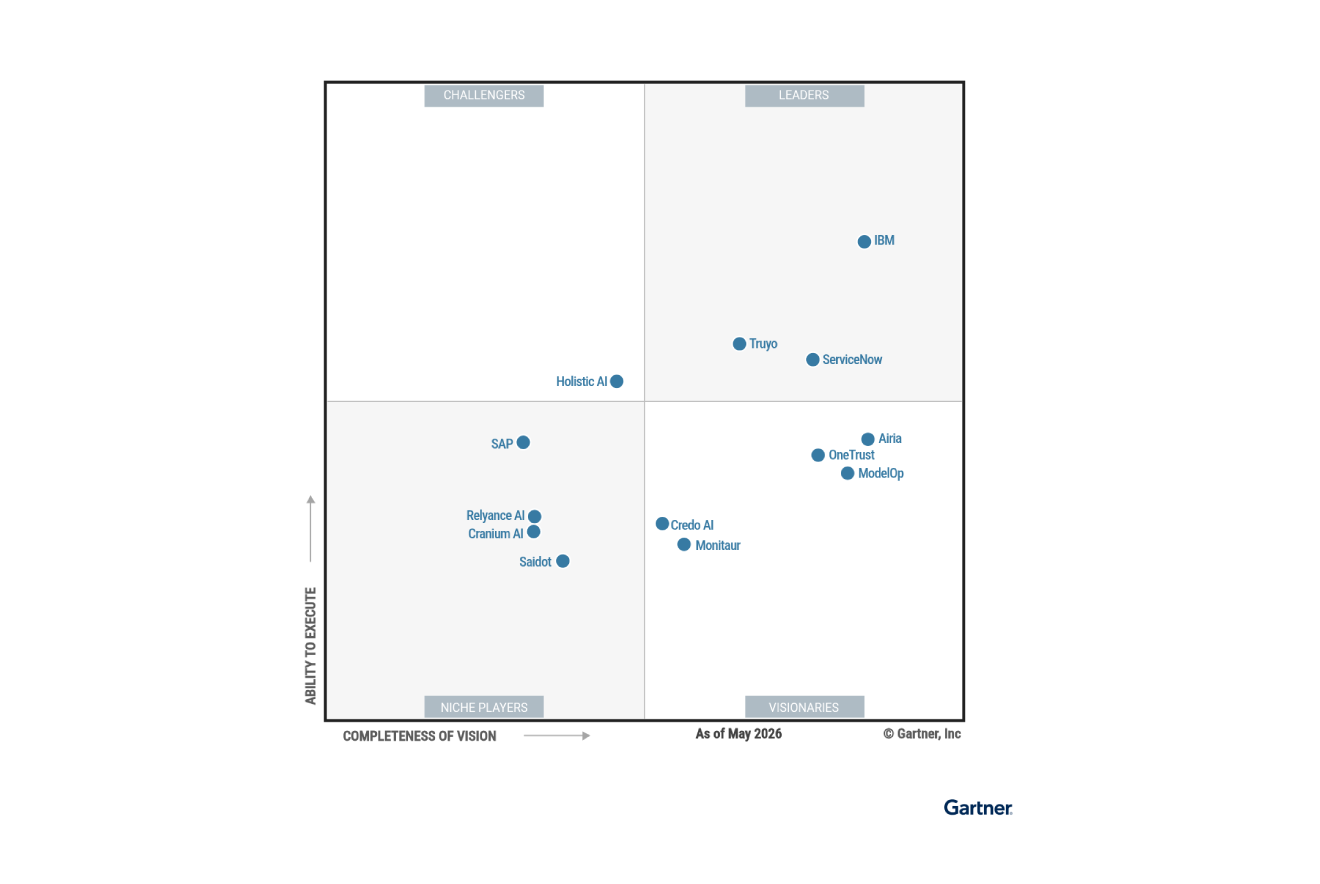
OneTrust Named a Visionary in the 2026 Gartner® Magic Quadrant™ for AI Governance Platforms
See why Gartner recognized OneTrust as a Visionary in the inaugural Magic Quadrant for AI Governance Platforms.
Frequently Asked Questions
OneTrust runs AI governance as a repeatable, structured process. AI use cases enter through structured intake workflows that capture ownership, purpose, data, and dependencies. Intake classification triggers the right assessment and approval path. Risk assessments route to reviewers based on risk tier and policy requirements, and approval decisions are documented with rationale, timestamps, and accountable owners. Once approved, systems enter the inventory with mapped controls and assigned ownership. Controls are tested on recurring schedules, evidence is collected from connected systems, exceptions route through defined remediation steps, and audit packages are generated with the workflow history and supporting records auditors need.
EU AI Act Article 9 requires a risk management system for high-risk AI. Article 17 requires quality management processes and documented evidence of conformity. Article 61 requires post-market monitoring. OneTrust structures the workflows, approval decisions, and evidence trails that support those EU AI Act requirements in practice, so organizations have documented process records.
The NIST AI RMF Govern function requires documented organizational practices, defined accountability, and ongoing governance processes for AI. Specifically, GOVERN 1 covers policies and procedures; GOVERN 2 covers accountability and organizational roles; GOVERN 6 covers risk tolerance and governance processes applied to AI use cases. OneTrust operationalizes those categories by routing AI use cases through intake, assigning ownership, standardizing review workflows, and connecting controls to evidence and accountability at each step.
ISO 42001 requires AI management system documentation, support for internal audits, and management review processes. OneTrust centralizes workflow history, control assignments, evidence packages, and audit trails in one place, giving teams the documented records ISO 42001 auditors check without manual assembly before each review.
OneTrust workflows connect to ServiceNow, Jira, Microsoft Teams, identity providers, and cloud infrastructure, bringing approvals, ownership data, and evidence into the workflow without manual collection. Governance records stay connected to the systems where work already happens, which makes it practical to manage AI governance across a large organization without creating a parallel administrative process.
You May Also Like




See how OneTrust structures AI governance from intake to audit trail.