The AI Governance Maturity Framework is designed to be applied, not just referenced. Organizations use the framework to:

The AI Governance Maturity Framework for Enterprise‑Ready AI
The AI Governance Maturity Framework is an enterprise AI governance infrastructure that defines how organizations move from AI experimentation to enterprise‑scale execution. The framework is most often applied by risk teams, CDOs, and AI platform leaders responsible for scaling AI across the enterprise.
How the AI Governance Maturity Framework Is Used


Identify their current AI operating model


Understand why AI initiatives struggle to scale


Align data, AI, risk, and business teams around a shared maturity baseline


Prioritize the capabilities required to govern AI in production and at scale
The Four Stages of AI Governance Maturity
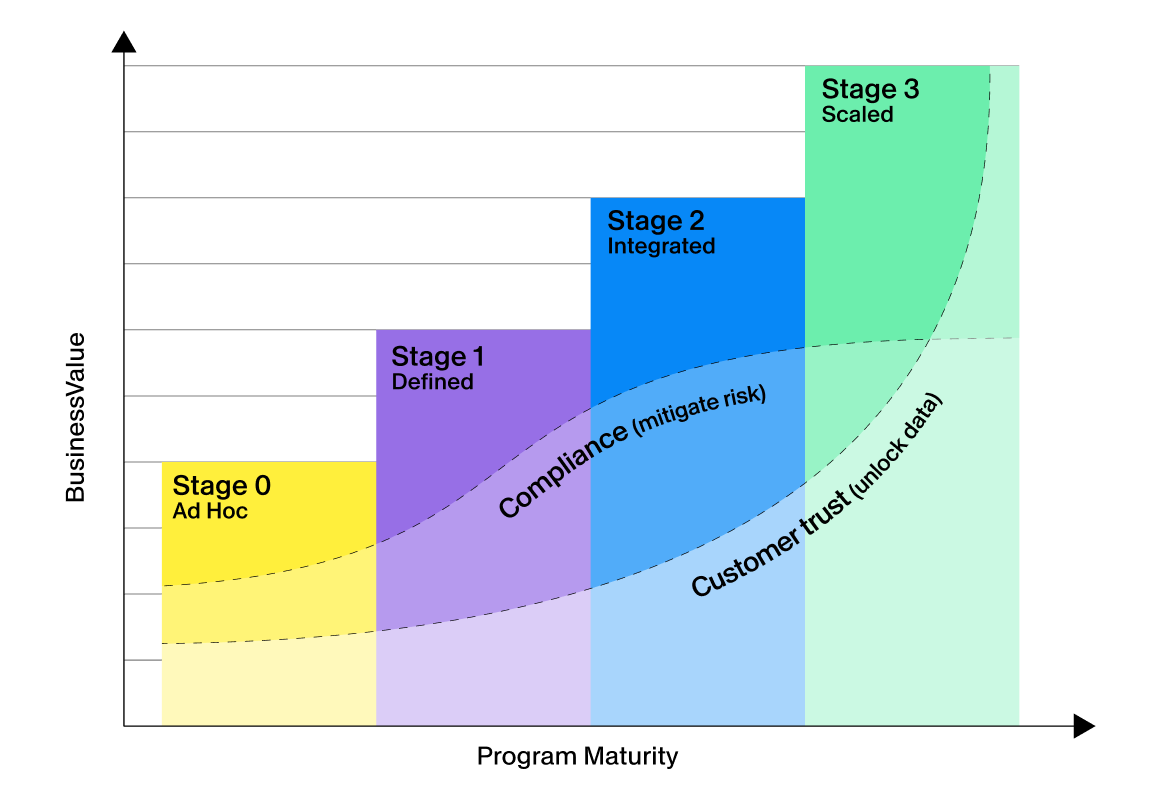
The four stages below reflect the most common patterns organizations move through as they progress from AI experimentation to enterprise‑scale execution.
Each stage reflects a distinct AI governance maturity level, showing how governance operates in practice as organizations scale AI from experimentation to enterprise execution.
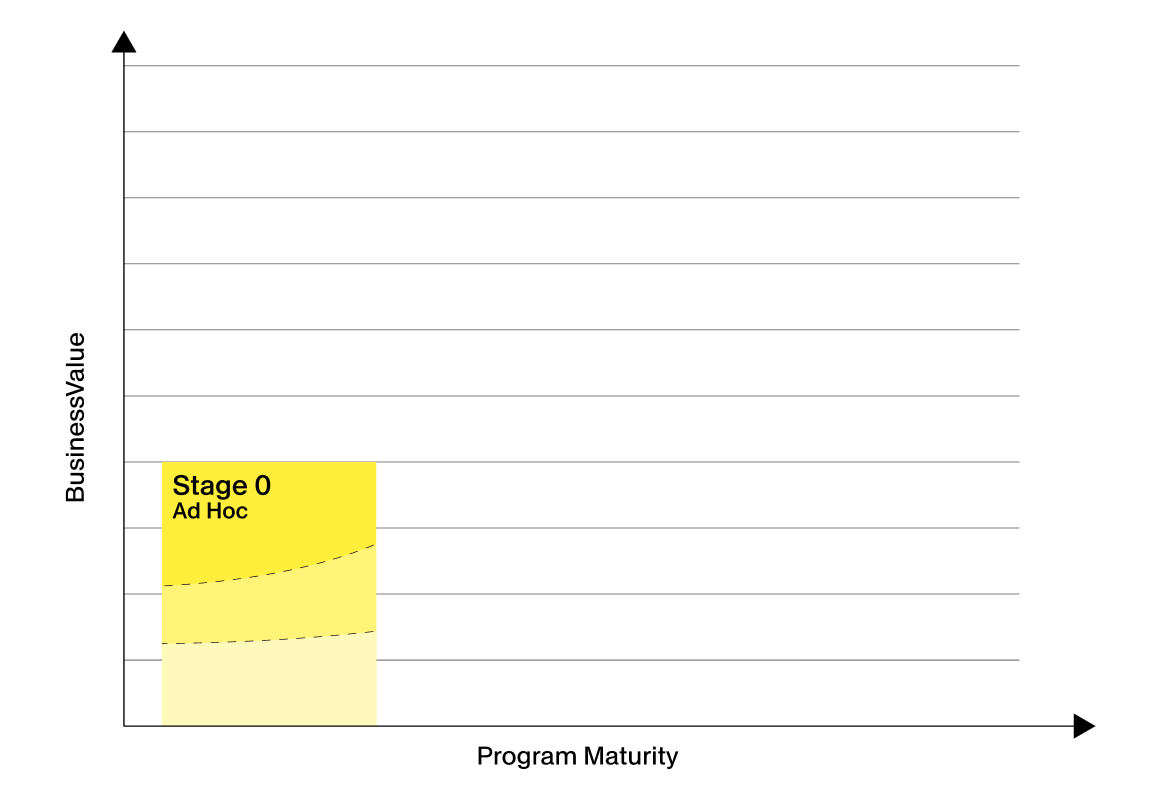
Stage 0: Inventory and Intake
At this foundational stage, organizations focus on understanding what AI exists, how it enters the organization, and who is accountable. Governance is introduced through visibility, intake, and prioritization—creating the baseline required for any scalable AI framework.



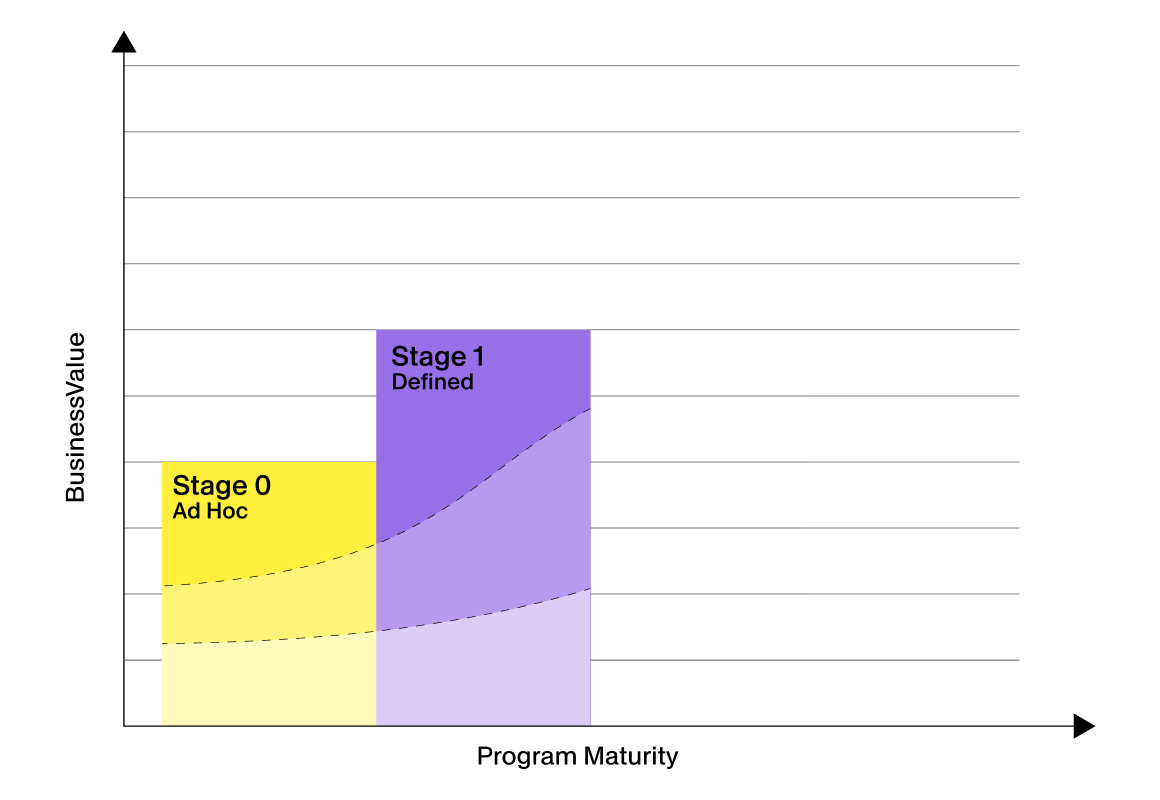
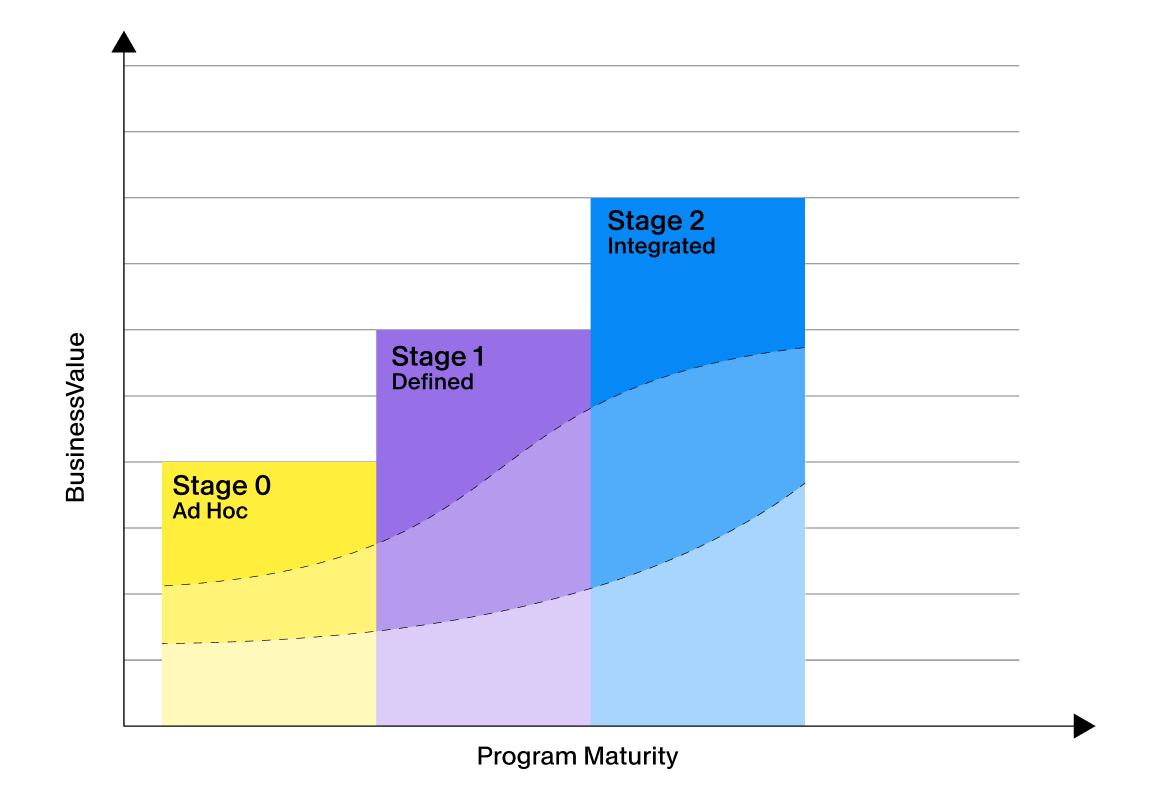
Stage 2: Lifecycle Governance
At this stage, AI governance is embedded into execution and focused on governing AI across development, deployment, and production monitoring. This is where governance starts to operate where AI actually runs and often represents the inflection point where AI success or failure becomes visible.
Stage 3: Scaled Governance
At the highest stage of maturity, AI governance operates as a continuous, automated enterprise capability. Governance is no longer project‑based—it is embedded, enforced at runtime, and applied consistently across teams, systems, and autonomous AI agents.

How This AI Framework Enables Scale
Most organizations can launch AI initiatives—but few can scale them responsibly. As AI investment accelerates maturity‑based governance is what separates organizations that experiment with AI from those that scale it into a reusable, enterprise capability.
Without a clear AI framework:
- AI initiatives cannot be reused or scaled
- Governance stops before production
- Model drift and downstream usage go unmanaged
- AI risk expands without increasing business value
This framework defines how AI governance operates; platforms like OneTrust operationalize those capabilities across the enterprise.
What Makes This AI Framework Effective
Designed for scale, not documentation:
This framework focuses on how governance operates in practice—not how it’s described on paper.

Embedded into execution, not bolted on:
Governance is integrated directly into AI development, deployment, and runtime workflows.

Continuous, not point‑in‑time:
Governance extends into production, enabling ongoing oversight, runtime policy enforcement, and agent governance.

Reuse drives compounding value:
Trusted data and governed AI models can be reused across teams—turning each initiative into a multiplier, not a one‑off effort.

Together, these principles allow organizations to move from experimentation to enterprise‑scale AI, where value compounds and governance enables innovation instead of slowing it down.
AI Governance Maturity Framework FAQs
The AI Governance Maturity Framework is designed to enable innovation at scale by treating governance as an operational system rather than a compliance exercise.
Not always. Many organizations operate across multiple stages at the same time. The framework helps identify the dominant operating pattern and the capabilities required to scale AI consistently across teams and use cases.
Yes. The framework explicitly extends governance into production, runtime enforcement, and autonomous AI systems—where most AI risk and enterprise value actually materialize.
Traditional models focus on policies, controls, and pre‑deployment reviews. This framework focuses on how governance operates continuously across data, AI systems, and execution—enabling reuse and compounding value rather than repeated effort.
Organizations typically begin by assessing their current maturity stage. From there, the framework helps prioritize the capabilities needed to govern AI in production, align stakeholders, and scale trusted AI across the enterprise.
OneTrust operationalizes the AI Governance Maturity Framework by acting as the system of continuous governance for data and AI—embedding governance directly into how data and AI are used, monitored, enforced, and scaled across the enterprise.
What's next?
OneTrust operationalizes the AI Governance Maturity Framework by embedding governance directly into how data and AI are used, monitored, and scaled across the enterprise.